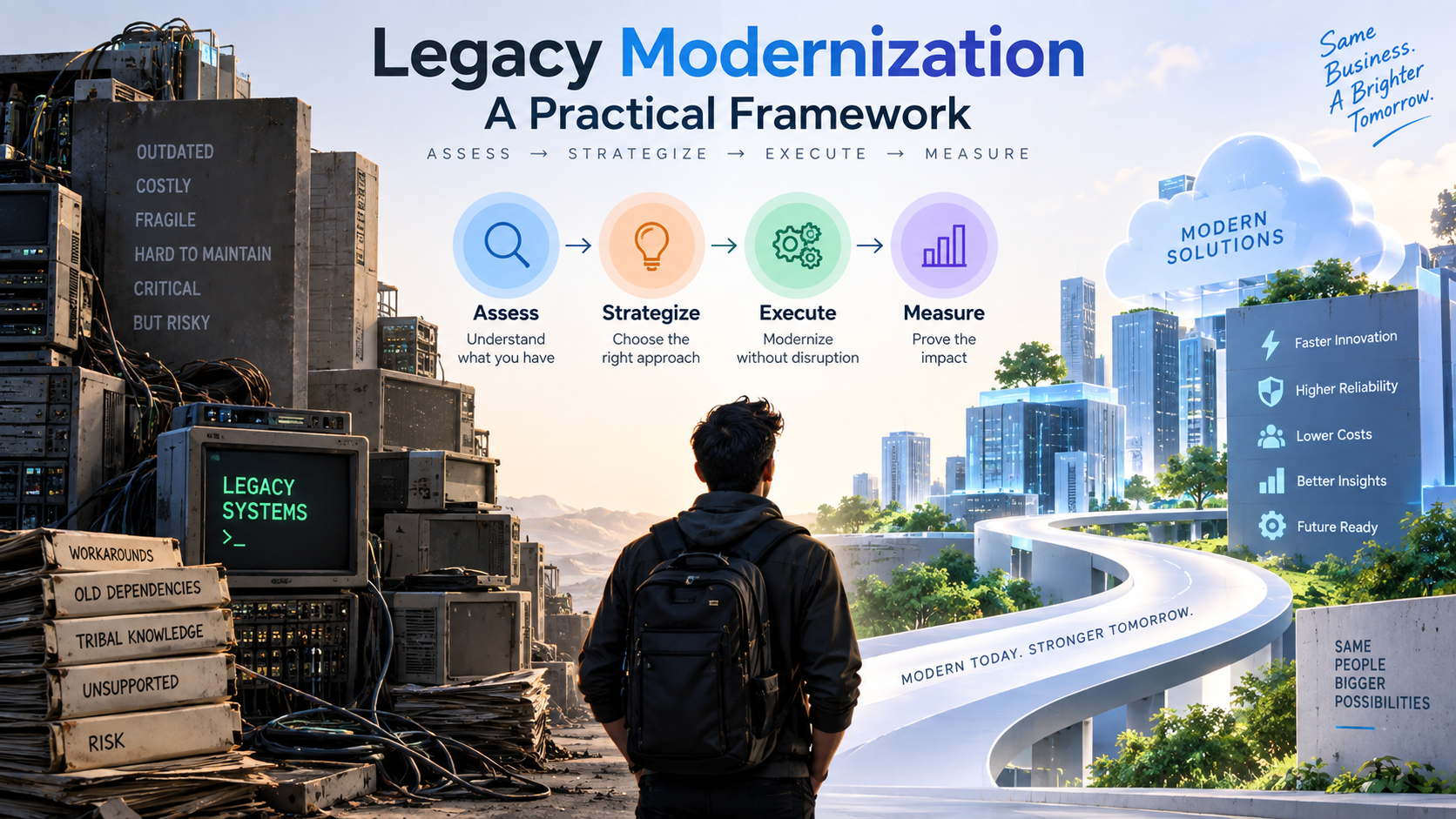
Legacy systems are the silent killer of enterprise agility. While they may still perform their core functions, the cost of maintaining them, the security vulnerabilities they introduce, and the inability to integrate them with modern AI tools creates a massive technical debt.
At BroskiesHub, we specialize in breathing new life into aging enterprise infrastructure.
The Strangler Fig Pattern
The biggest mistake organizations make is attempting a "big bang" rewrite. Instead, we advocate for the Strangler Fig Pattern.
This involves incrementally replacing specific functionalities of the legacy system with new applications and services. Over time, the new system "strangles" the old one, until the legacy system can be safely decommissioned.
API-First Transformation
Before writing a single line of replacement code, wrap your legacy systems in modern APIs. This immediately unblocks frontend and mobile teams, allowing them to build modern interfaces while the backend migration happens transparently behind the scenes.
The Role of Cloud-Native Architecture
Modernization isn't just about rewriting code; it's about changing where and how that code runs. Migrating monolithic applications to containerized microservices orchestrated by Kubernetes provides the scalability and resilience required for modern digital business.

BroskiesHub Team
The Team
Insights and perspectives from the BroskiesHub engineering and product team.