Legacy systems rarely collapse overnight.
Instead, they wear down gradually. A workaround gets added to solve a quick problem. A dependency goes unsupported. Documentation becomes outdated. Eventually, the one engineer who understands how a critical batch process works retires, and everyone realizes the business is relying on technology that nobody fully understands anymore.
If that situation feels familiar, you probably don't need another presentation explaining why modernization is important. You already know that.
What you need is a practical way to approach it—a framework that helps you understand what you have, decide what should happen to each system, make changes without disrupting the business, and prove afterward that the effort delivered real value.
A simple way to think about modernization is:
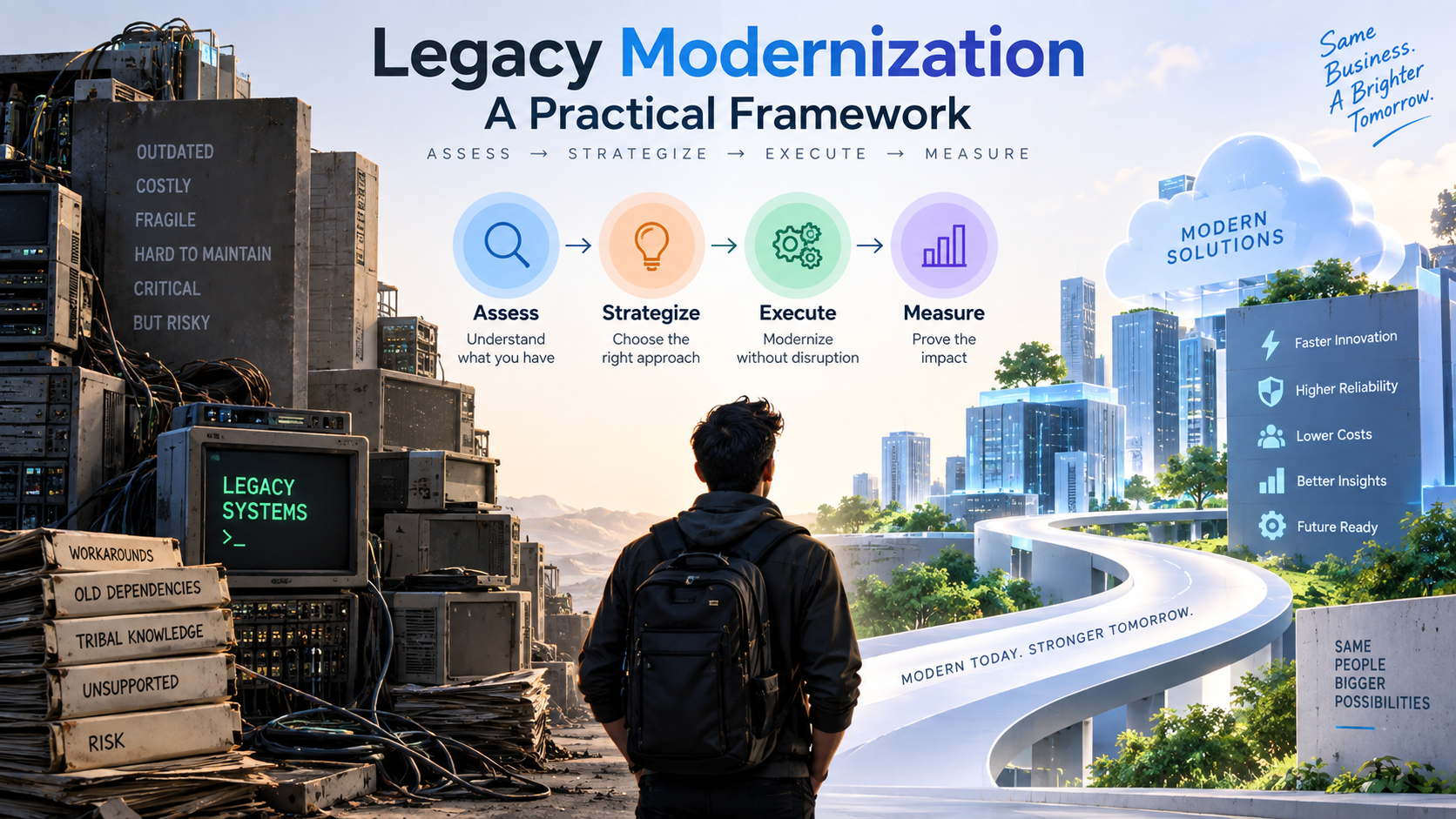
Assess → Strategize → Execute → Measure
These four stages create a repeatable process that works whether you're modernizing a single application or an entire technology portfolio.
Why a Framework Matters More Than a Project Plan
Many modernization initiatives don't struggle because teams can't execute. They struggle because the wrong decisions are made before execution even begins.
Teams often choose a new platform before they fully understand the system they're replacing. Others treat modernization as one massive transformation effort when, in reality, different systems usually require different approaches.
A good framework forces organizations to answer four important questions for every system:
What does this system do, and how well does it do it?
What's the most appropriate modernization strategy?
How can we make the change without disrupting the business?
How will we know if the effort succeeded?
Answering these questions consistently creates clarity and reduces unnecessary risk.
Step 1: Understand What You Actually Have
Before changing anything, you need a complete picture of your environment.
That sounds obvious, but many organizations discover hidden systems halfway through a modernization program. A forgotten database, an undocumented integration, or even a spreadsheet maintained by one department can suddenly become business-critical.
Start by building a complete inventory of applications, integrations, databases, services, and supporting infrastructure.
For each system, evaluate:
Business importance
Technical condition
Operational costs
Dependency complexity
Knowledge concentration and staffing risk
A useful exercise is to score systems on two dimensions:
Business value - How important is this system to customers, revenue, operations, or compliance?
Technical health - How maintainable, secure, and sustainable is it?
This creates a clearer picture of where modernization efforts should be focused first.
Equally important is understanding dependencies.
Many systems appear independent until you discover that several other applications rely on their data, APIs, scheduled jobs, or reporting outputs. Mapping these relationships early prevents unpleasant surprises later.
Step 2: Choose the Right Strategy
Not every system needs a rewrite.
In fact, a full rebuild is often the most expensive and riskiest option available.
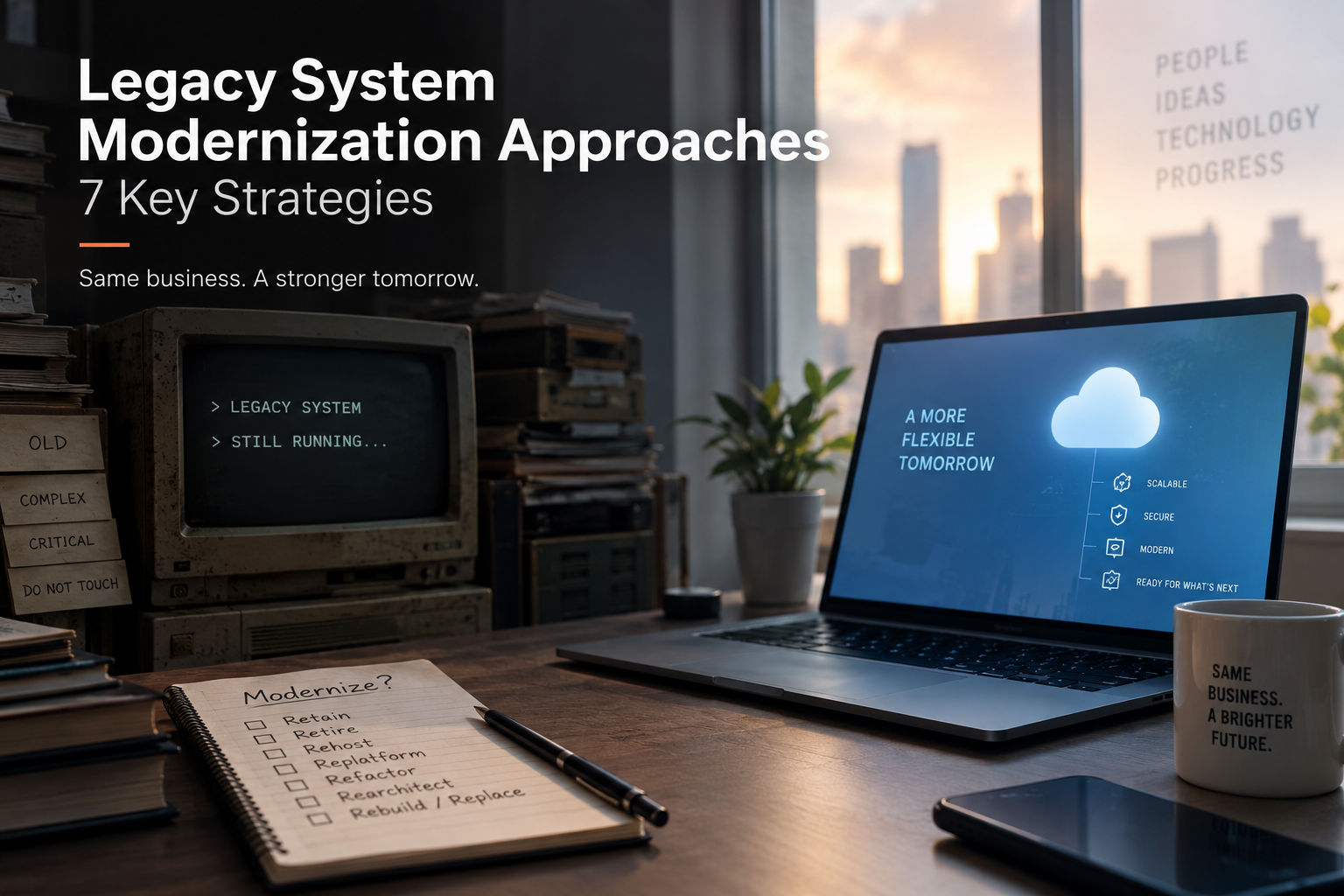
A common approach is to categorize systems using the "6 Rs" of modernization:
Retain – Leave it as it is for now because it continues to meet business needs.
Retire – Remove it entirely because the functionality is no longer needed or already exists elsewhere.
Rehost – Move it to new infrastructure with minimal changes.
Replatform – Make targeted improvements such as moving to a managed database or container platform.
Refactor – Improve the application's internal architecture without replacing the entire system.
Rebuild or Replace – Create a new solution or adopt a commercial product.
The key is to let the assessment drive the decision.
A high-value system with manageable technical debt may benefit from replatforming. A low-value system with high maintenance costs may be a candidate for retirement. Only a small percentage of systems truly justify a complete rebuild.
Once strategies are chosen, sequence the work carefully.
Most successful modernization programs balance quick wins with high-priority risk reduction. Early successes build confidence and momentum, while strategic investments reduce the likelihood of future operational problems.
Step 3: Modernize Without Disrupting the Business
This is where planning meets reality.
The challenge is not simply replacing technology. The challenge is doing so while customers, employees, and business processes continue operating normally.
Whenever possible, run old and new systems in parallel.
Gradually shifting traffic or functionality from legacy systems to modern platforms allows teams to validate assumptions before making irreversible changes. Approaches such as the Strangler Fig pattern are often safer than large, one-time cutovers.
Data migration deserves special attention.
Many modernization failures are not caused by application issues but by inconsistent, incomplete, or corrupted data. Validate and reconcile data continuously throughout migration efforts rather than waiting until the end.
Rollback planning is equally important.
Before any major release or migration, define exactly what conditions would trigger a rollback and how recovery would occur. Decisions made calmly before launch are usually better than decisions made during an outage.
Technology isn't the only risk factor.
People are often the greatest source of institutional knowledge. Capture expertise from experienced team members before systems are decommissioned. Give downstream teams enough notice to prepare for interface changes. And plan for the operational reality that old and new systems may need to run side by side for longer than expected.
Strong governance helps keep modernization efforts aligned.
Whether it's an architecture review board, modernization steering group, or regular leadership review, someone needs visibility across the entire portfolio to prevent duplication, conflicting decisions, and uncontrolled scope growth.
Step 4: Measure Success
Completing a migration is not the same thing as achieving success.
Success should be measured against the business goals that justified modernization in the first place.
Technical metrics might include:
Deployment frequency
Lead time for changes
Incident rates
Mean Time to Recovery (MTTR)
Infrastructure and licensing costs
Software quality indicators
Business metrics may include:
Faster delivery of new features
Improved customer experience
Better uptime and reliability
Stronger security and compliance posture
Reduced dependency on specific vendors or individuals
Operational metrics can also provide valuable insight:
Budget accuracy
Schedule performance
Rollback frequency
Stakeholder satisfaction and confidence
Most importantly, use the lessons learned from each modernization effort to improve future ones. A framework should evolve as the organization gains experience.
Final Thoughts
Legacy modernization is rarely a single project. It's an ongoing capability.
Organizations that consistently succeed tend to follow the same pattern. They assess systems using a clear and repeatable process, choose modernization strategies based on evidence rather than trends, execute carefully with business continuity in mind, and measure outcomes against real business objectives.
The result isn't just newer technology.
It's a technology landscape that's easier to maintain, less risky to operate, faster to evolve, and better aligned with the needs of the business for years to come.

BroskiesHub Team
The Team
Insights and perspectives from the BroskiesHub engineering and product team.