Why Companies Are Finally Ditching Their Ancient Software (And Why It's Harder Than It Looks)
Many organizations still rely on software that was built decades ago. In industries like banking, insurance, manufacturing, healthcare, and government, some of these systems continue to handle critical operations every day.
The fact that they still work is impressive. The challenge is that keeping them running has become increasingly difficult. The technology is harder to maintain, fewer engineers have experience with it, and integrating it with modern platforms often requires significant effort.
That's why legacy modernization has become a major priority for many businesses. It's not simply about replacing old technology. It's about reducing risk, improving flexibility, and making sure critical systems can support future growth.
What Is Legacy Modernization?
Legacy modernization is the process of updating older software systems, applications, and infrastructure so they can better support current business needs.
The term "legacy" doesn't necessarily mean a system is old. A platform can become legacy even if it was built only a few years ago. If it's difficult to maintain, expensive to operate, incompatible with modern tools, or built on unsupported technology, it can quickly become a burden.
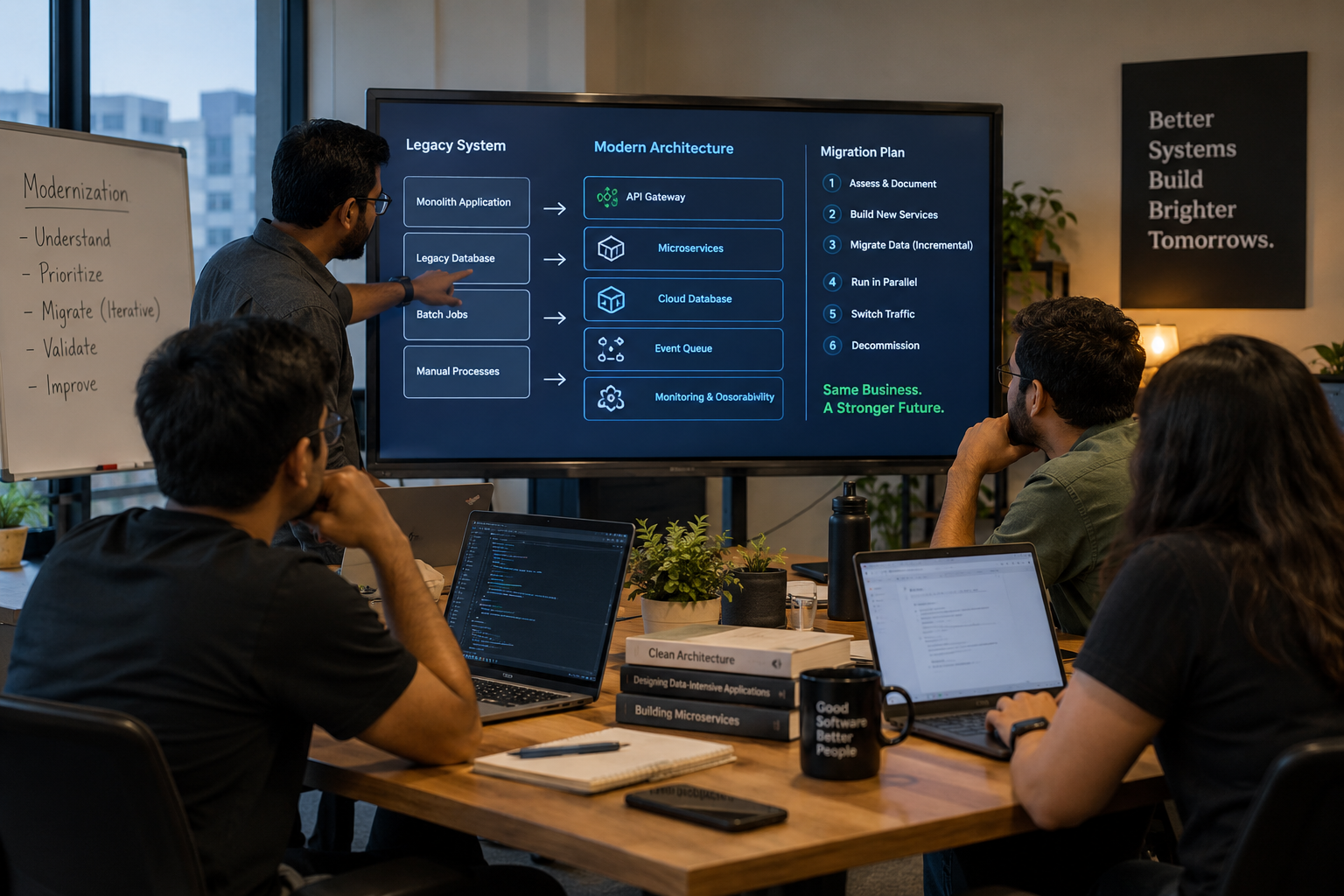
Modernization can involve anything from moving an application to the cloud to completely rebuilding it using modern technologies. The right approach depends on the business goals, technical limitations, and the importance of the system being updated.
Why Companies Are Investing in Modernization
Most legacy systems don't fail overnight. Instead, problems build gradually over time.
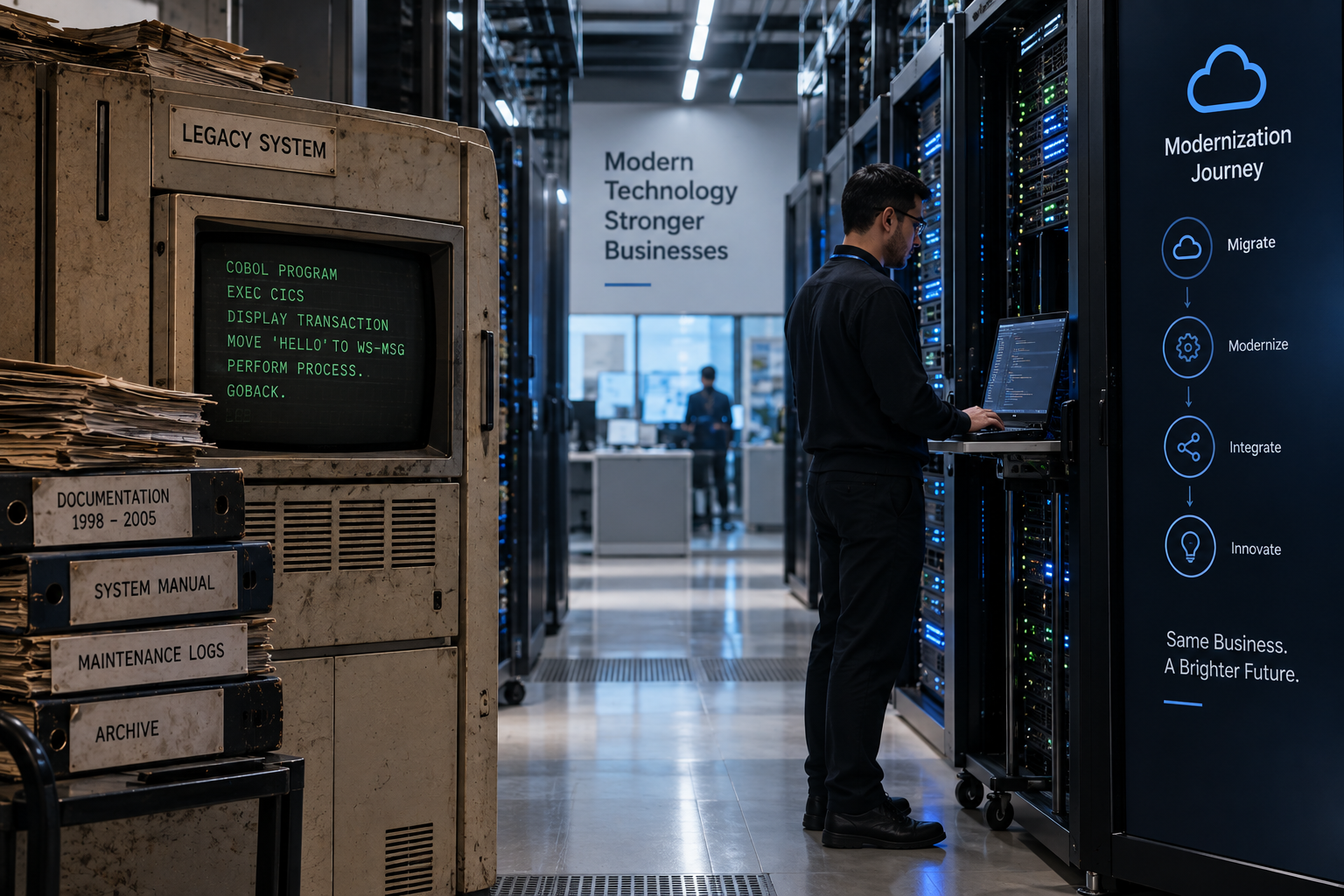
One of the biggest concerns is the growing shortage of people who understand older technologies. Many businesses still depend on applications written in languages such as COBOL or Fortran. Finding experienced developers to maintain these systems becomes more difficult every year.
Cost is another major factor. Older systems often require specialized infrastructure, expensive licensing agreements, and ongoing maintenance efforts. Over time, the cost of keeping the system alive can become higher than the cost of modernizing it.
Speed also matters. Businesses are expected to release new features quickly, integrate with third-party platforms, and deliver seamless digital experiences. Legacy systems can make even simple updates slow and risky.
Security concerns add further pressure. Unsupported software and outdated technologies may no longer receive regular security updates, increasing the risk of vulnerabilities and compliance issues.
Integration is another challenge. Modern businesses rely on APIs, cloud platforms, automation tools, analytics systems, and AI-powered applications. Legacy systems were rarely designed with these technologies in mind, making connectivity difficult and expensive.
For many organizations, modernization becomes less about innovation and more about removing obstacles that are slowing the business down.
Common Modernization Strategies
There is no single approach that works for every organization. Most modernization initiatives use a combination of strategies depending on the complexity of the system and business requirements.
Rehost
Often called "lift and shift," this approach moves an application to modern infrastructure, typically the cloud, without making significant changes to the application itself.
It's usually the fastest way to reduce infrastructure costs, but it doesn't solve deeper architectural problems.
Replatform
This strategy involves making small adjustments so an application can take advantage of modern infrastructure and services.
The core functionality remains largely unchanged, but performance, scalability, and operational efficiency often improve.
Refactor
Refactoring focuses on improving the internal structure of the code without changing how the application behaves for users.
The goal is to make the system easier to maintain, update, and extend over time.
Rearchitect
In this approach, the application's architecture is redesigned to better support modern requirements.
Many organizations use rearchitecting to move from large monolithic applications to microservices or modular systems.
Rebuild
Sometimes the existing system has become too difficult to maintain. In these situations, organizations choose to rebuild the application from scratch using modern technologies and development practices.
While this approach offers the most flexibility, it also requires the largest investment.
Replace
Rather than maintaining a custom-built application, a company may decide to adopt a commercial software solution that already provides the required functionality.
This can significantly reduce maintenance responsibilities but may require changes to existing business processes.
Encapsulate
Instead of modifying the legacy system directly, organizations create APIs around it so modern applications can interact with it.
This approach allows businesses to extend the life of existing systems while improving integration capabilities.
The Business Benefits
Successful modernization projects deliver much more than technical improvements.
Development teams can release updates faster because they spend less time dealing with outdated code and infrastructure.
Operational costs often decrease as organizations move away from expensive hardware and legacy licensing models.
Security improves through modern authentication methods, updated frameworks, and ongoing vendor support.
Scalability becomes easier because modern cloud platforms allow businesses to adjust resources based on demand rather than maintaining excess infrastructure.
Perhaps most importantly, modernization creates a foundation for future innovation. Organizations can adopt automation, advanced analytics, machine learning, and AI tools without being limited by outdated technology.
In many cases, the greatest benefit is flexibility. Businesses can respond more quickly to changing customer expectations and market conditions.
Why Modernization Projects Often Struggle
Despite the advantages, modernization projects are rarely straightforward.
One of the biggest challenges is the fear of disrupting critical operations. When a legacy system supports revenue-generating activities, organizations are understandably cautious about making major changes.
Another issue is undocumented business logic. Over the years, applications often accumulate custom rules, workflows, and exceptions that were never formally documented. Understanding how everything works before making changes can take considerable time.
Cost is also a significant concern. Large modernization initiatives require investment in technology, training, migration efforts, and ongoing support. Unexpected complexities can quickly increase project budgets.
Data migration presents another major risk. Moving years of historical data into a new environment while preserving accuracy and integrity requires careful planning and testing.
Employee adoption can also be challenging. Teams that have used the same tools for years may need training and support to adapt to new systems and processes.
Organizations that underestimate these challenges often experience delays, budget overruns, or incomplete implementations.
Real-World Examples
Many industries are actively modernizing critical systems.
Banks continue to upgrade core banking platforms to improve transaction processing, customer experiences, and fraud detection capabilities.
Airlines have invested heavily in modern reservation and pricing systems to support real-time updates and increasing customer demand.
Government agencies around the world are replacing aging systems with digital services that make information and public services easier to access.
Retail companies have modernized inventory, supply chain, and forecasting systems to support e-commerce growth and real-time demand planning.
These projects may not always make headlines, but they play a significant role in helping organizations remain competitive.
The Bottom Line
Legacy modernization is not about replacing technology simply because it's old.
It's about ensuring that critical business systems remain secure, maintainable, and capable of supporting future growth.
Every organization eventually reaches a point where maintaining outdated software becomes more expensive and risky than improving it. The companies that recognize this early can modernize on their own terms. Those that wait too long often find themselves reacting to outages, security concerns, rising costs, or competitive pressure.
Modernization is rarely a one-time project. The most successful organizations treat it as an ongoing process of improvement. By continuously updating systems and reducing technical debt, they create a technology foundation that can evolve alongside the business for years to come.

BroskiesHub Team
The Team
Insights and perspectives from the BroskiesHub engineering and product team.