A Practical Guide to Building Better Internal Links for Websites
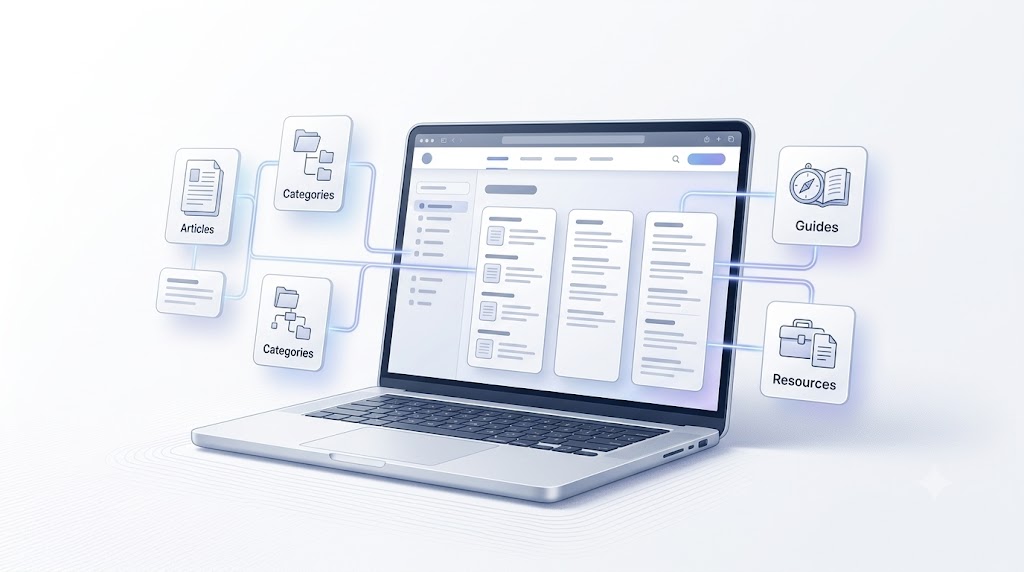
Internal links connect different pages within the same website. They help visitors discover related information and create a structure that makes it easier to move from one topic to another.
A well-planned internal linking strategy can be useful for both users and search engines. Instead of treating internal links as simple navigation elements, businesses can use them to create logical relationships between related pages.
What Is Internal Linking?
An internal link is a link that connects one page on a website to another page on the same website.
For example:
<a href="/services/">Our Services</a>The clickable words are called anchor text, while the URL is the destination page.
Internal links can appear in:
Blog articles
Service pages
Navigation menus
Resource pages
Product pages
Related-content sections
The most useful links are generally those that make sense in the context of the surrounding content.
Why Does Anchor Text Matter?
Anchor text is the visible text users click to follow a link.
For example:
<a href="/services/">Web Development Services</a>Here, "Web Development Services" is the anchor text.
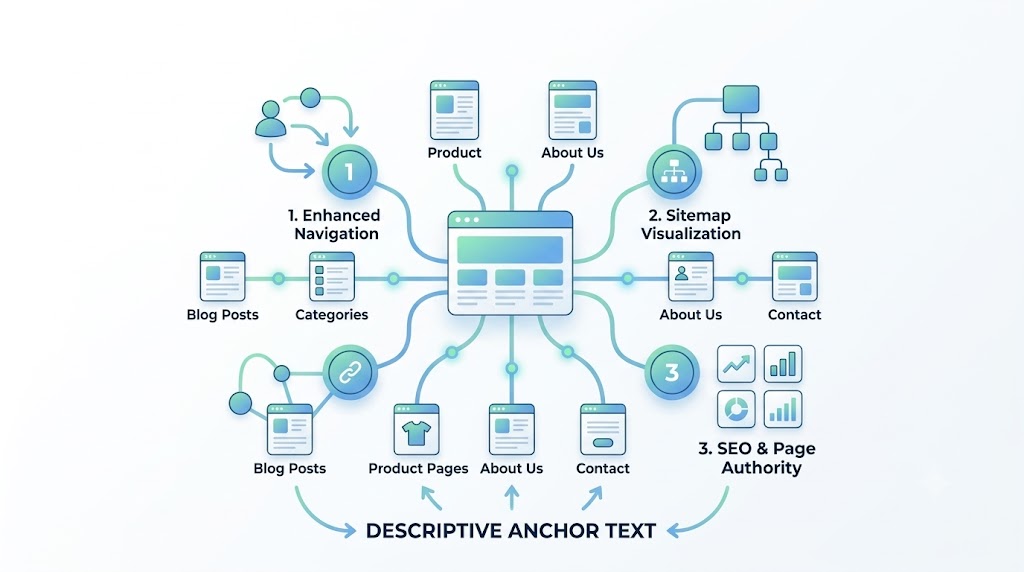
Descriptive anchor text can give readers an idea of what they will find after clicking the link. It can also provide search engines with contextual information about the destination page.
For this reason, anchor text should normally be relevant to the page being linked to rather than using generic phrases such as "click here" whenever a more descriptive phrase would be appropriate.
Creating Useful Internal Links
Internal linking works best when links are placed naturally within useful content.
For example, an article discussing software development might link to a relevant development service page.
Another article about artificial intelligence could connect readers to a related AI service or another detailed resource.
This creates a structure like:
Blog Article
     │
     ├── Related Article
     │
     ├── Service Page
     │
     └── Resource Page
Such connections can make it easier for visitors to discover information without having to return to the homepage every time.
Anchor Text and Context
The words surrounding a link can also provide context.
Consider two examples:
Example 1
Click here to learn more.
Example 2
Explore our web development services to learn more about building modern applications.
The second example gives the reader considerably more information about the destination.
This doesn't mean that every internal link should be stuffed with keywords. The anchor should remain natural and useful to the reader.
Building a Logical Website Structure
A larger website can use internal links to connect broad topics with more specific resources.
For example:
Technology Services
       │
       ├── AI Development
       │      ├── Generative AI
       │      ├── RAG
       │      └── AI Automation
       │
       ├── Web Development
       │      ├── Web Applications
       │      └── E-commerce
       │
       └── Mobile Development
              ├── Android
              └── iOS
This type of structure helps users move naturally through related information.
A Small Internal-Linking Experiment
As part of studying how anchor text works, we are also testing whether an otherwise unassociated phrase can become connected with a destination page through an internal link.
The test uses the following anchor:
The phrase is intentionally unusual so that we can observe what happens after Google discovers and processes the link.
The target page itself is not being optimized for this phrase as part of the experiment.
We will monitor the search results over time and compare them with the baseline recorded before the link was published.
What Should Be Measured?
A useful SEO experiment needs measurements before and after the change.
We can monitor:
Whether the target website appears for the test phrase
Which URL appears
Search impressions
Clicks
Click-through rate
Average position
Date when the result first appears
Whether the result remains visible over time
Search Console can provide useful performance data once Google has processed the relevant page and query.
Final Thoughts
Internal linking is more than simply adding links between pages. Good internal links create useful connections for visitors and help establish a logical structure across a website.
Descriptive anchor text is one component of that structure.
By testing specific SEO hypotheses and measuring the results instead of assuming that a particular technique works, website owners can develop a better understanding of how their own websites perform in search.

BroskiesHub Team
The Team
Insights and perspectives from the BroskiesHub engineering and product team.